Camas Prairie Citizen Science Day draws many at annual gathering
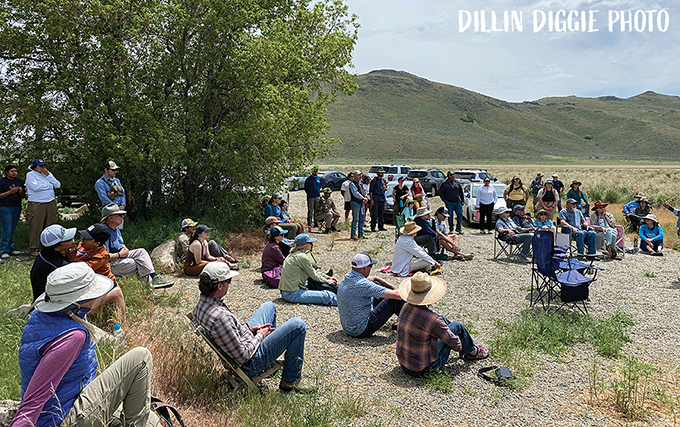
Area participants attend the Camas Prairie Citizen Science Day at Centennial Marsh on Friday, May 29.
By LORI ANN EDMO
Sho-Ban News
CAMAS PRAIRIE CENTENNIAL MARSH — Representatives from the Shoshone-Bannock Tribes Camas Technical Team and others came together May 29, at the Camas Prairie Centennial Marsh to come up with a battle plan to fight the Garrison’s creeping meadow foxtail invasive grass that is overtaking the camas.
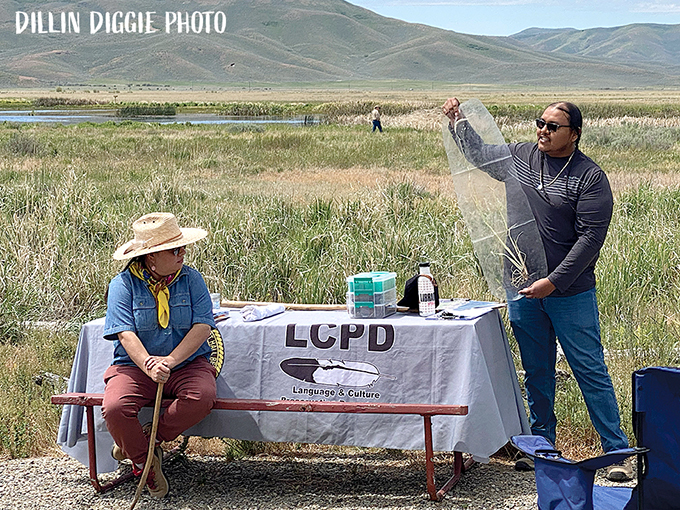
Historical Research and Original Territories manager Nolan Brown shows a weed to attendees.
Nolan Brown, Original Territories and Historic Research manager, said in the morning, the camas technical team met with Idaho Fish and Game (IDFG), Idaho Department of Lands and those experience in fire and grazing to discuss the plan for using the two tools looking into fighting the enemy grass (Garrisons). Lyman Tissidimit, Otis Osborne and Kermit Bacon were present for that discussion.
In the afternoon a total of 63 people turned out for the Camas Prairie Citizen Science Day.
People came from throughout the state of Idaho and some people from Oregon who heard about it as they were traveling through Fairfield.
John Guthrie of IDFG, did a presentation on the management of the Camas Prairie Centennial Marsh. Nolan and Bailey Dann, also from the Original Territories program, talked about tribal history, the relationship of the Tribes to the camas, a traditional food source. They also spoke about the Camas Prairie being part of the Fort Bridger Treaty and the Bannock War, how it started on the Camas Prairie and why it was fought.
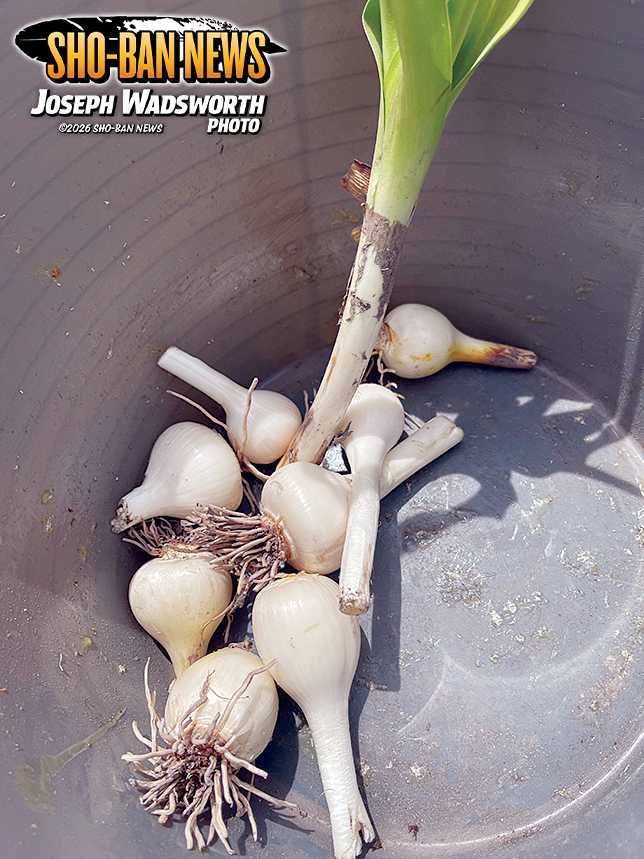
Close view of a camas plants collected.
Sidney Fellows, Shoshone-Bannock, discussed the research being conducted through the Natural Resources Conservation Service (NRCS) called an Indigenous Stewardship Methods evaluation regarding effective practices. The NRCS funds were developed for tribes to use for methods for caring for the land.
After the presentations, participants went to the camas gathering area where Susan Filkins, Bureau of Land Management (BLM) tribal liaison and botanist, discussed plant identification, told folks about how Garrisons spread through seeds and rhizomes. Nolan said she shared examples and talked about other grasses on prairie. Cody O’Dale, from the Sho-Ban Tribes Environmental Waste Management program, talked about using GIS, remote sensing, and using drones on the prairie, however, it was too windy to do a drone survey.
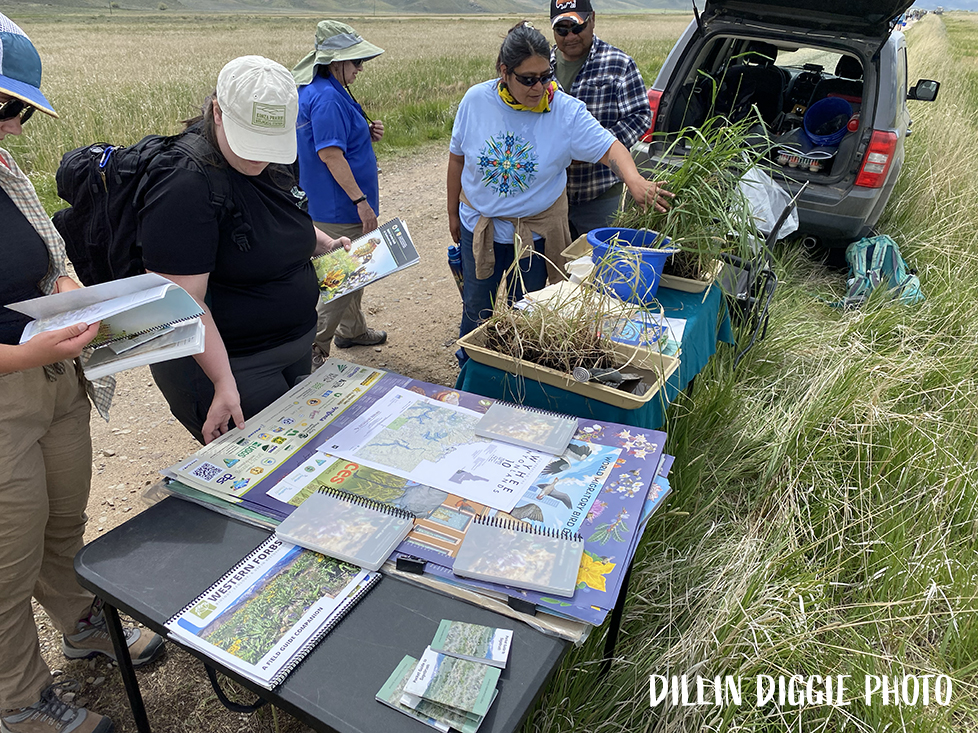
Participants receive information on camas plants.
In addition, Nolan said Julia Alcala, and Idaho State University student getting her Masters in anthropology, has been approved for research with Tribes to study and help in fight, explained how to use the ARC GIS survey 123 app, to do on the ground surveys. Participants walked through the prairie, noted what they saw such as patches of Garrisons and camas and they used the app to record observations. About 20 plus people did the surveys with some downloading the app.
Fellows, Brown and Filkins explained how to dig up the invasive grass Garrison’s creeping foxtail, telling what to do and what not to do. “We probably did about 400 square feet where we removed Garrison’s today - a small dent it, but it was a successful day, a positive contribution in battle against Garrisons,” Brown said.
The Tribes Camas Technical team is led by Sidney Fellows, Louise Dixey, Bailey Dann, Brown, along with Dr. Georgia Hart- Fredeluces, Alex Robinson, and Julia Alcala, from Idaho State University, all who have been approved by Fort Hall Business Council. Brown said those from ISU have put in due diligence to assure the research is approved by the Tribes Culture Committee and the LCPD staff. Tyler Anderson, also a Sho-Ban tribal member, and a recent University of Idaho graduate is assisting. He’s also getting a master’s degree in environmental policy. Anderson is part of a Washington State University BioRISE program that Dr. Sequoia Dance Leighton, also Sho-Ban, is overseeing.
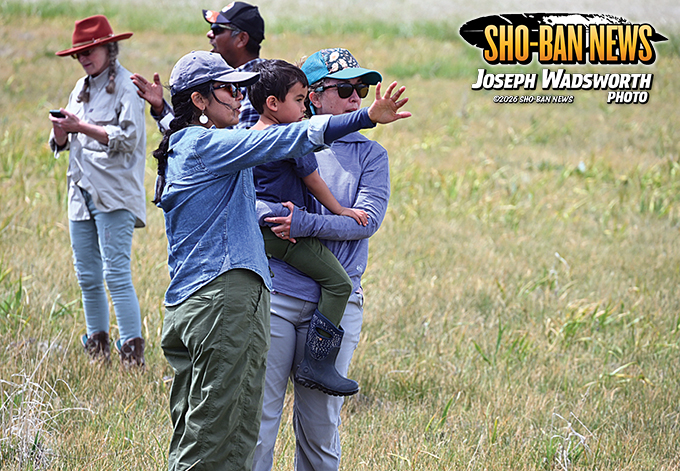
Sidney Fellows speaks about Camas Prairie.
Brown noted participants in the day’s activities were surprised to see the amount of garrisons’ grass overtaking the Camas Prairie. “It was good for people to see what we are fighting.”
The camas lilies already bloomed two weeks ago, the blooms are dried up, and there are many camas plants in ground, because of not enough water and they’re going into dormancy. Hopefully next year, if there is enough water the lilies will be plentiful. Nolan said when the tribal people go out to gather camas, they will have to be careful because there is still death camas out there.
On May 30, tribal gatherers went out and harvested camas. Prior to it, Dillin Diggie did a prayer, Brown spoke about the camas and Stephan Kniffin did the cedaring. They returned to the Fairfield City Park to have a meal prior to heading home.
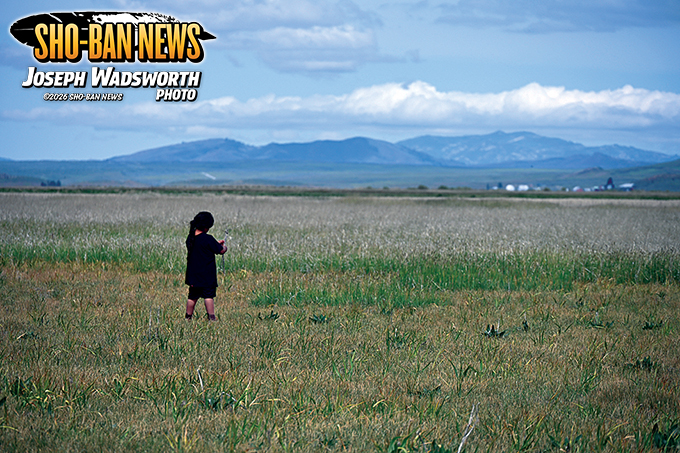
Youth roam the fields at Centennial Marsh.