Gay Mine contamination affects salamanders, according to study
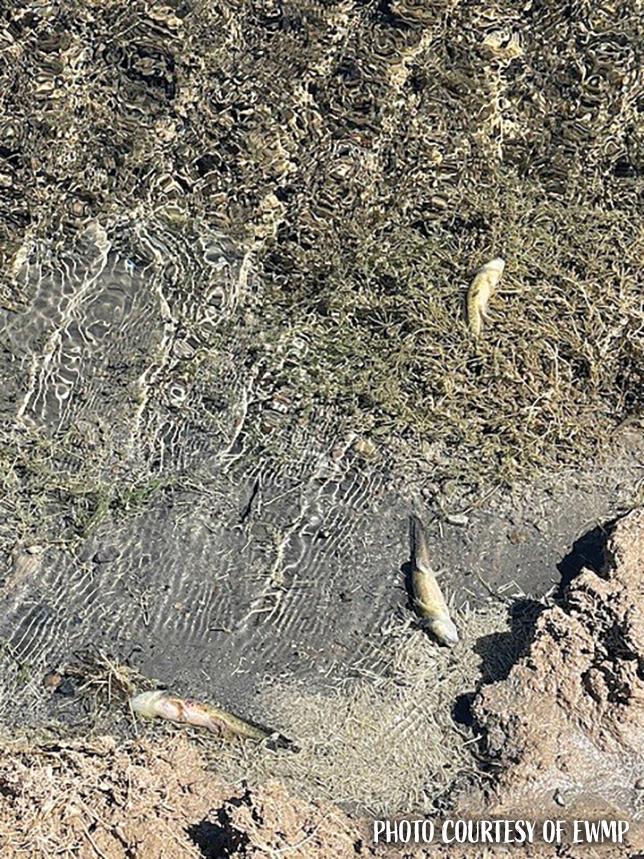
Deceased salamander found in pit lake A-12.
FORT HALL — The Shoshone-Bannock Tribes Environmental Waste Management Program (EWMP), the US Fish & Wildlife Service (USFWS), and the US Geological Survey (USGS) collaborated to study the effects of trace-metal contamination left at the Gay Mine on local ecosystems.
Biologists collected samples from wetlands and pit lakes to measure metal concentrations in soil, water, and amphibian blood and tissues. Phosphate mining has contaminated many sites in Southeastern Idaho, including the Gay Mine on the Fort Hall Reservation, where mining occurred from 1946 to 1993. Waste rock piles, ore piles, and open pits remain, leaking metals into the environment and harming wildlife, including birds, amphibians, and fish.
In June 1999, about 150 dead Barred Tiger Salamander larvae were found in a former mining pit at Gay Mine (Skorupa et al. 2002). In 2000, more than 200 dead or dying salamander larvae were found in another pit. In 2025, several pit lakes—including A-12, Upper Stock Pond, Lower Stock Pond, Z-Pit, and W Pit—contained dead salamander larvae. Most of these larvae tested positive for Ranavirus (Family Iridoviridae), which is the leading cause of reported mass mortality events in amphibians in the United States. This is the only such event recorded for Barred Tiger Salamanders in Idaho.
The study led by the Shoshone-Bannock Tribes, US Fish & Wildlife Service, and US Geological Survey focused on three main objectives:
1) Measure concentrations of metals, including selenium, from phosphate mining in soil, aquatic insects, amphibian larvae, and birds that eat these insects, to understand how metals move from water to land.
2) Determine if metal concentrations differ among amphibian life stages (eggs, larvae, and adults).
3) Assess how often metals and Ranavirus infections occur together in larval amphibians, and explore any links between metal exposure and Ranavirus infection.
Exposure to metals like selenium from mining can weaken amphibian immune systems, making them more susceptible to contaminants and increasing the risk of Ranavirus infection. The study allows EWMP to examine the relationship between trace metals and Ranavirus by analyzing samples from mining pits and wetlands—including live and dead salamander larvae, sediment, and aquatic invertebrates. The research will help determine how much of metals such as selenium, arsenic, and chromium have accumulated in affected species and assess the potential impacts on their growth, survival, and reproduction.
The study began in July 2025 with the collection of specimens and samples from impacted areas of Gay Mine. Researchers analyzed sediment, aquatic organisms, and salamanders for selenium, Ranavirus, Batrachochytrium dendrobatidis, and Batrachochytrium salamandrivorans. Results showed elevated selenium levels, and Ranavirus was confirmed in salamander spleen, liver, and kidney tissues by the National Wildlife Health Center and Michigan State University.
Ranavirus does not affect humans but can spread to other amphibians and fish. To prevent accidental transmission, always wear disposable gloves and rubber boots, and thoroughly clean and disinfect equipment and supplies with a 4% bleach solution for at least five minutes. After disinfection, rinse everything with clean water and allow it to dry before reuse.
The Shoshone-Bannock Tribes and the Environmental Waste Management Program will continue to analyze aquatic organisms, sediment and salamanders.