Tribal members learn about camas plants & Shoshone language
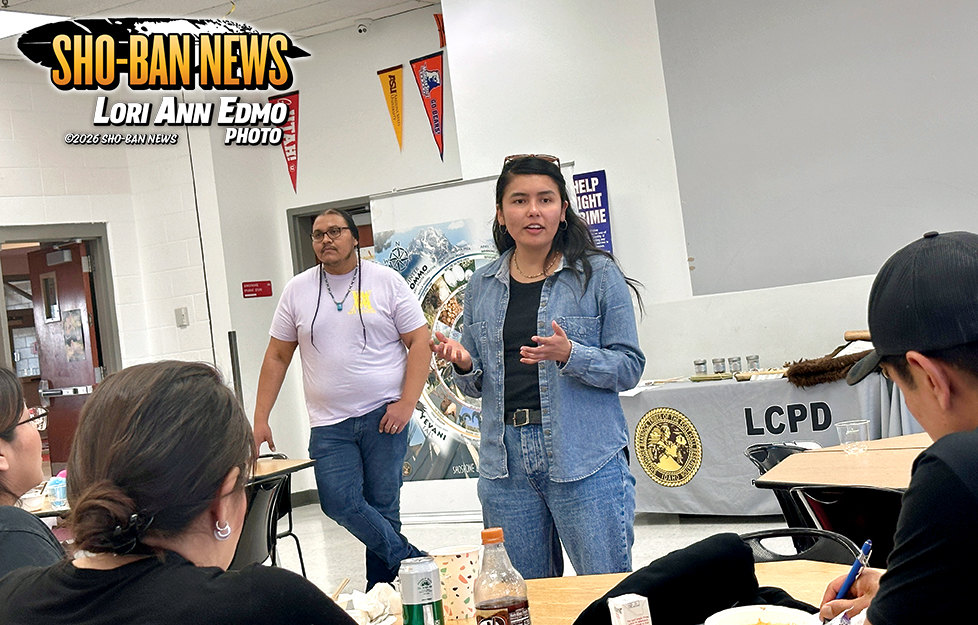
Sydney Fellows (right) and HeTO manager Nolan Brown talk about camas plantsat the LCPD camas night on March 20.
By LORI ANN EDMO
Sho-Ban News
FORT HALL — Community members were educated about camas and the Shoshone language March 20 at Sho-Ban Jr./Sr. High School.
Shoshone-Bannock Language and Culture Preservation Department staff hosted the event to acknowledge the arrival of spring.
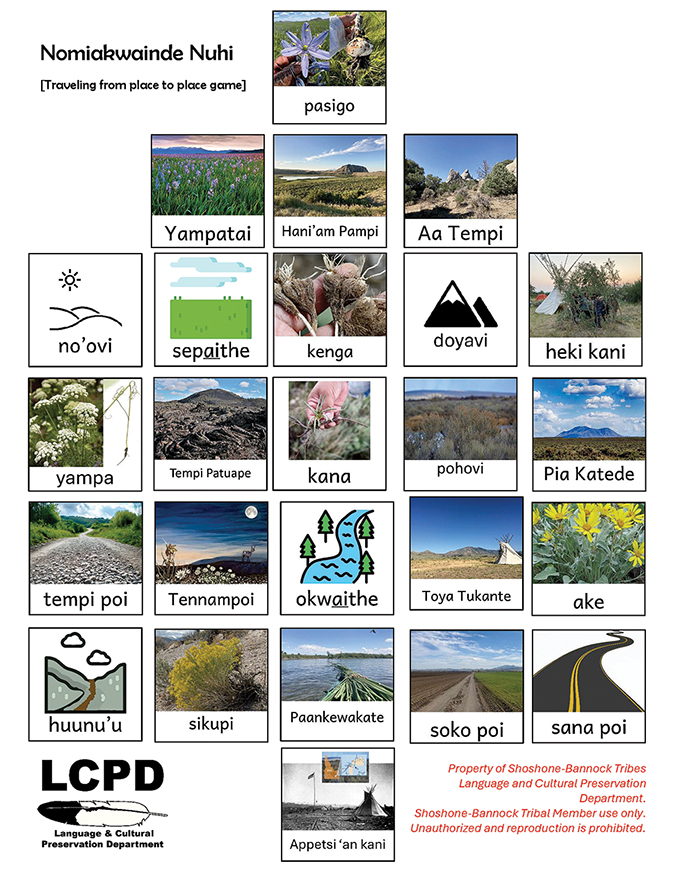
A meal of chili, fruit, corn bread and frybread Veldina Tissidmit prepared was served prior to a Nomiakwainde Nuhi (traveling from place to place) game Bailey Dann and Nolan Brown learned from the Comanches at the National Indian Education Association conference.
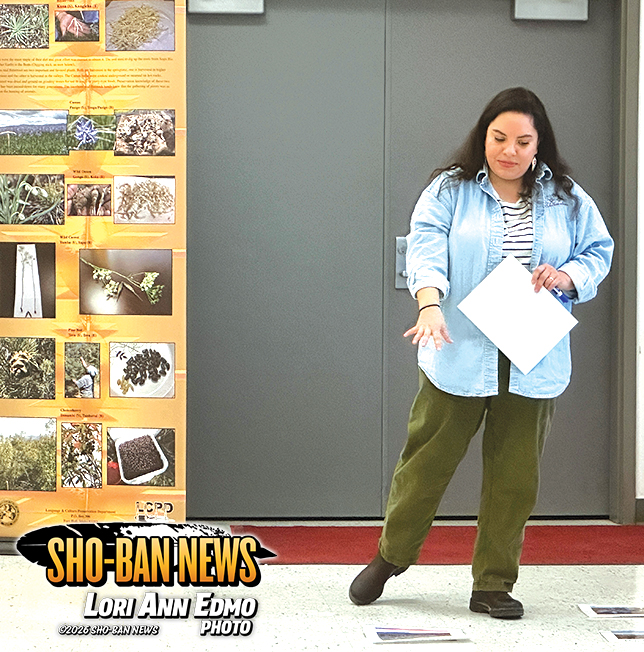
Historical Research and Original Territories researcher Bailey Dann explains a
game.
Images of a variety places with the Shoshone words below them were placed on the floor where participants had to say the word then go the correct path from appetsi’an kani (Fort Hall) to pasigo (Camas Prairie).
Dann, Original Territories historic researcher, explained the significance of the game and language. She said we used to travel from place to place – knowing exactly where we were going because our ancestors had good memories. The game was illustrated following the seasons. The game helps with memory and helps produce vocabulary. It’s important to speak the language as the land recognizes language, “The land recognizes us, it remembers us, it holds memories for us. And when we speak the language out on the land, we can be in relationship with the means out of our landscape.” Bailey said by sharing games like this, “our children and our elders, our peers, we can learn from each other and remember this and make sure that it’s never lost, because despite anything that happened to us, these things are still here, and it’s up to us,” she continued. “It’s our responsibility to pass that on and remember.”
Afterward, Nolan Brown, Original Territories manager and Sydney Fellows, camas researcher, provided an update on the plan to rid the Camas Prairie of the enemy grass Garrisons Creeping Meadow foxtail that is overtaking the traditional food source.
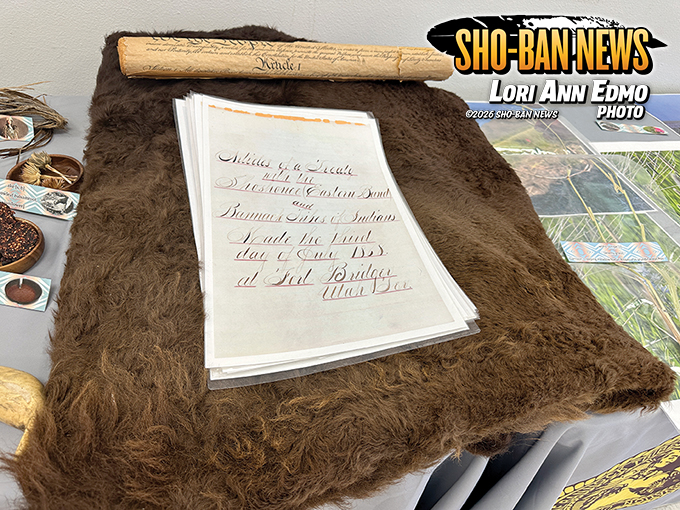
The U.S. Constitution and the Fort Bridger Treaty displayed on a buffalo hide.
Brown showed photos of a once abundant prairie of camas lilies taken in 2018 that is now being overtaken by the enemy grass. He said they’re doing everything they can to figure out how to get rid of it including utilizing researchers and others. The grass was imported from overseas, and it was found growing in North Dakota by Garrison’s dam that why it’s called Garrisons Creeping Meadow foxtail. The USDA and NRCS started growing it in places for cattle and forage. Nolan said another reason to protect the camas is because it was included in our Treaty, Article 2, the lands that are reserved, it reads Camas Prairie it doesn’t say Kansas Prairie.
“So, if we say these are our homelands we have to take care of them, right?” And if we say we have a Treaty right to those things, we need to take care of them, Brown continued.
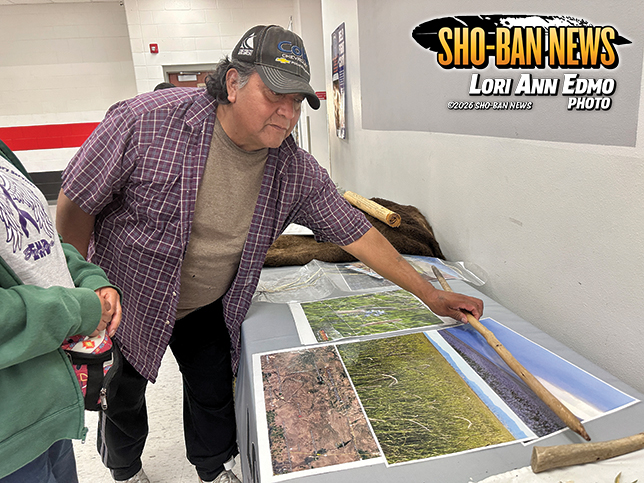
Lindy Bache checks a Poto stick at the event.
Sydney Fellows said research been done back to 2019 when Georgia Hart Fredeluces, Idaho State University anthropology assistant professor, researched doing burning in the spring. Idaho Fish and Game owns the Camas Prairie and they manage with herbicides but the Tribes don’t want that. LCPD is considering nonchemical ways of ridding the grass – every summer the plant dies but the rhizomes (underground stem) stay alive. The buildup of the Garrisons on the ground is what’s crowding out the camas. Some considerations are mowing, grazing, possibility of fire, but involving smaller research test plots. Trying to get as much information as they can.
The partnership with Idaho Fish and Game – a memorandum of agreement exists.
Brown said his role is helping sort out the IFG plan. Fellows said there isn’t a set timeline yet.
Louise Dixey, LCPD manager, said they’ve been working with the local folks – Fairfield residents regarding the Camas Prairie, that’s their economy and it’s also a bird refuge. Regarding hand pulling, “We want tribal members to help with removing the grass. It’s a long term project, it’s our way of life so we have to preserve it,” she said.
Various tables of traditional foods and items were displayed for attendees to view.